Download the SaaS SEO Guide PDF
Over 60+ page SaaS SEO Guide in PDF format so you can read it whenever you want!


Over 60+ page SaaS SEO Guide in PDF format so you can read it whenever you want!


Planning a marketing budget for a SaaS company is never a simple task, and 2026 certainly isn’t making it any easier. Marketing budgets remain under pressure while AI investment continues to grow, leaving SaaS companies to balance more priorities without having more marketing dollars to spend.
So, how much should your SaaS company spend on marketing? In this guide, we’ll look at 2026 industry benchmarks and trends for marketing spend, along with how to plan and allocate a SaaS marketing budget at different growth stages. We’ll also highlight common mistakes to avoid. Let’s get started.
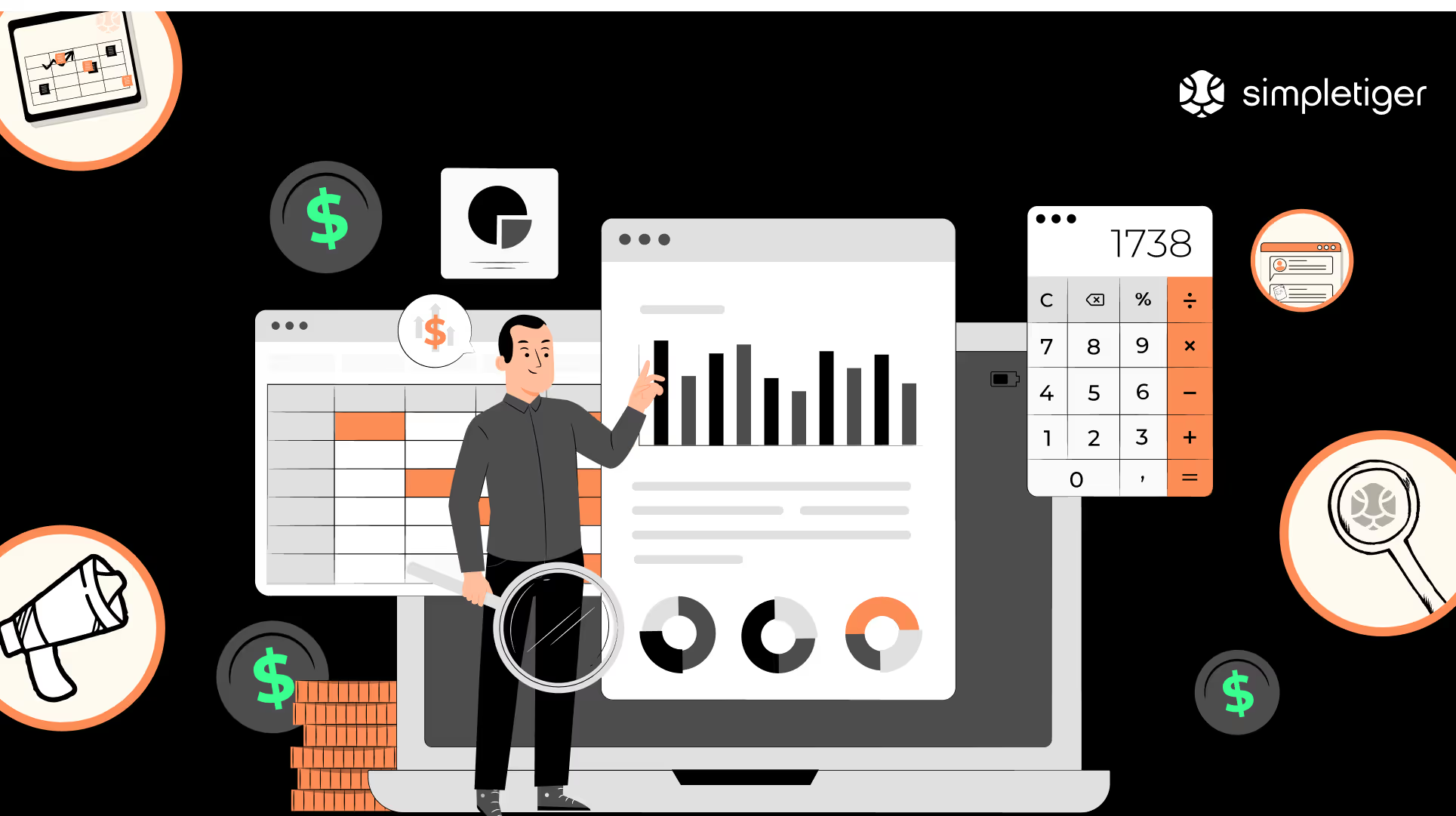
The honest answer: it depends on your company’s stage, growth targets, and resources. However, there are some useful benchmarks and trends for SaaS businesses that can inform your planning.
One common rule of thumb is to invest around 10% of your annual revenue back into your marketing budget. Recent data shows many SaaS companies are currently budgeting a bit less than that, likely due to cost-cutting.
A 2026 survey of 1,000+ private B2B SaaS companies found the median marketing spend is about 8% of Annual Recurring Revenue (ARR). That’s held steady since dropping from roughly 10% in 2023.
It’s important to note that this is a median, not a mandate. Your optimal percentage could be higher or lower. For instance, high-growth, venture-backed startups often spend aggressively to capture market share. They might pour significantly more than their annual revenue into sales and marketing combined — essentially operating at a planned loss to fuel rapid growth.
The survey data supports this: venture-funded SaaS companies in the survey were spending about 100% more on marketing (as a % of revenue) than their bootstrapped counterparts. It’s not unusual for a fast-scaling SaaS in growth mode to invest 15%, 20%, or even more of total revenue into marketing when customer acquisition is the priority.
On the flip side, a bootstrapped or mature SaaS company focused on efficiency might stick to <5% of revenue on marketing, especially if they rely more on organic growth or referrals.
We see company stage shape the budget across our own client base, too. SaaS clients with the strongest funding or revenue profiles invest across more SimpleTiger services, on average, than clients at earlier stages. In other words, growth often means expanding the marketing mix, not just putting more money behind the same channels.
(Source)
Besides percentage of revenue, another benchmark to consider is marketing spend per acquisition or as a ratio to lifetime value. For example, some SaaS CFOs will look at the Customer Acquisition Cost (CAC) payback period – how long it takes to recoup marketing and sales spend from a new customer’s revenue.
While this strays into technical territory, keeping an eye on metrics like CAC or Customer Lifetime Value (LTV) helps ensure your budget is not only in line with revenue but also with the profitability of customers acquired.
Benchmarks for healthy SaaS CAC vary, but many aim for a CAC that is about 1/3 or 1/4 of LTV (implying an LTV:CAC ratio of 3:1 or 4:1). If you find your planned budget would make that ratio way off (say 1:1, spending as much as you earn), it’s a red flag to adjust.
Marketing budgets haven’t exactly bounced back in 2026. Average marketing spend across industries sits at 7.8% of company revenue in 2026, barely up from 7.7% in 2025. That’s still 18% below where it was four years ago. If your company’s board is citing cost cuts, you wouldn’t be alone in targeting the lower end of the range.
Yet a tight budget doesn’t have to mean a stagnant one. If competitors are raising big funding rounds and stepping on the gas, holding steady at 5% might actually mean falling behind.
Keep an ear to the ground for other shifts, too. AI is competing for a growing share of marketing dollars, with CMOs now allocating an average of 15.3% of their budgets to AI initiatives. It’s also changing how SaaS buyers search.
G2 surveyed 1,076 B2B software buyers in March 2026. More than half now start their research with an AI chatbot more often than Google, up from 29% in 2025. It’s no surprise, then, that 94% of digital leaders plan to increase their investment in Answer Engine Optimization (AEO).
Paid opportunities are emerging, too: OpenAI began testing ads in ChatGPT in February 2026 and has since expanded its advertising tools for marketers.
That’s a lot to balance, especially when 56% of CMOs say they don’t have enough budget to execute their strategy and 54% report insufficient resources. Marketing budgets aren’t necessarily getting bigger in 2026, but they have more to cover. Think traditional search, AI-generated answers, and evolving paid channels.
(use these as guidelines, not strict rules)
(Source)
Remember, these percentages are just reference points. The “right” budget for you will also depend on factors like your Average Contract Value (ACV), sales cycle length, and go-to-market strategy. A sales-driven SaaS may put more toward sales headcount, while a product-led or self-serve company may allocate more to marketing.
The beauty of SaaS is the data you have — use it. If last year’s 8% of revenue on marketing yielded 30% growth, you can decide if maintaining or increasing that investment aligns with your 2026 growth target. Benchmarks can guide you, but your past performance should ultimately determine where your budget goes.
Once you have a sense of how much to spend, the next challenge is where to spend it. A successful SaaS marketing budget isn’t just about the total dollars; it’s about how you distribute those dollars across channels, campaigns, and time.
Here are practical tips to allocate your marketing budget for maximum impact:
Start by identifying which marketing channels have historically brought you the best results for the cost. Do your closed-won customers often cite finding you through content marketing, paid search, or search engine optimization (SEO)? Lean into what works.
Allocate a good portion of your SaaS budget to the proven winners that drive quality leads. But be careful not to put all your eggs in one basket.
The marketing landscape changes quickly. Algorithms update, ad prices rise, and buyer behaviors shift. After all, 71% of buyers currently rely on AI chatbots for software research, up from 60% just seven months ago.
Diversify across a few core channels so that if one underperforms, others can pick up the slack. That doesn’t mean abandoning proven channels every time something new comes along, either.
As of August 2026, 63% of our SaaS clients invest in AEO, but every one of them still invests in traditional SEO, too. Across our client base, we also see SaaS companies spending across a mix of content, link building, PPC, and other channels.
For 2026, we recommend putting 30–40% of your budget toward demand capture, including paid search, high-intent paid social, retargeting, and conversion-rate optimization. Another 20–30% can go toward organic demand creation through SEO, expert content, comparison pages, and distribution.
From there, a sample budget might put 20% toward brand-building efforts like webinars and podcasts (more on this next). Another 10% each can go toward customer marketing and marketing technology. Reserve 5% for experimental or new channels (more on this in tip 5).
Your exact mix will vary. The goal is to put more behind what works while leaving room to test new opportunities.
It’s tempting to spend the bulk of your budget on immediate lead generation — things like PPC campaigns, lead purchase, or sales development reps — because these can show quick returns. However, sustainable SaaS growth also depends on building visibility, authority, and trust over time.
Set aside part of your budget for efforts that may not yield MQLs overnight but can influence how buyers discover and evaluate your brand. This could include content marketing (thought leadership blogs, whitepapers), PR and media efforts, community building, or sponsoring industry events and podcasts.
That long-term visibility matters even more as search behavior changes. Buyers may encounter your company in Google, an AI-generated answer, a piece in an industry publication, or another source well before they’re ready to buy. You want your brand to show up consistently and be associated with the problem you solve.
A common split is to dedicate perhaps 50–70% of spend to direct demand generation and 20–30% to brand awareness. But if you’re in a crowded space or launching a new category, you might increase brand spend. For 2026, we recommend keeping at least 15% of your marketing budget dedicated to brand and category creation.
The key is not to neglect these longer-term investments just because they’re harder to measure. Track proxy metrics like website traffic growth, social engagement, branded search volume, AI visibility, and share of voice alongside leads and revenue.
Your budget should be a portfolio of short-term and long-term bets. The right balance helps you generate demand today without sacrificing tomorrow’s pipeline.
Marketing budget isn’t solely for acquiring new customers — savvy SaaS marketers allocate a portion to engage and grow the customers they already have. Customer marketing can include programs like user webinars, customer newsletters, loyalty or advocacy programs, and upsell/cross-sell campaigns.
Why spend here? Because improving retention and expansion has massive ROI. Keeping a customer is far cheaper than acquiring a new one, and happy customers can become your best marketers via referrals and case studies.
In tight times, companies that focus on customer success and expansion often outperform those that only chase new logos. For 2026, we recommend putting 10–15% of your budget toward lifecycle and customer marketing. Focus those dollars on increasing customer satisfaction and usage, which can lead to more renewals and upgrades.
Keep Net Revenue Retention (NRR) in mind as you plan, too. The right customer marketing strategy can support both sides of the equation: keeping customers longer and growing those relationships over time.
AI has quickly become a bigger part of the marketing budget. As mentioned above, CMOs now allocate an average of 15.3% of their marketing dollars to AI initiatives, and 98% are already piloting or using AI in some form.
Used well, those tools can be like a force multiplier for your budget. For instance, content creation AI (like GPT-based tools) can speed up first drafts and repurpose existing assets without proportional increases in spend. Meanwhile, AI-driven analytics can help identify which campaigns are working (and where to reallocate marketing dollars).
The efficiency gains can be significant. McKinsey’s experience with multiple companies suggests AI can drive two to three times higher productivity and 60–70% savings on execution-related tasks.
If you haven’t already, consider dedicating a slice of your budget to marketing technology that supports the work your team is already doing. That could mean an AI writing assistant, advanced marketing attribution software, or a chatbot for your website. These tools often pay for themselves by increasing productivity or conversion rates.
However, treat AI as an enabler, not a magic wand. Only 30% of CMOs report having mature AI readiness, and one in three senior marketing leaders aren’t seeing the returns they expected. Keep room in the budget for clean data, human oversight, and the skills needed to use these tools well.
The goal isn’t simply to automate more. It’s to free up your team for higher-value strategy and creative work while making the budget work harder.
A great budget plan is not 100% rigid. The marketing world can throw surprises — a new channel might emerge mid-year, a competitor’s campaign might change the landscape, or an unexpected PR opportunity could arise.
For 2026, we recommend reserving 5–10% of your budget for experiments and unplanned opportunities. Think of this as your “marketing R&D” fund. You might test paid placements in an emerging AI channel, pilot an account-based marketing program, or experiment with a new content format.
By having funds earmarked for experiments, you won’t feel like you’re robbing your main programs if something interesting comes up.
Similarly, have a contingency for cost overruns. Maybe ad prices skyrocket in Q4, or you need extra funds to capitalize on an unexpected spike in demand. Keeping some budget flexible gives you room to respond without disrupting the programs already working.
Allocating budget isn’t a one-and-done at the start of the year. The best-run SaaS marketing teams treat their budget as a living document. Set a cadence (monthly or quarterly) to review performance of each channel and campaign against the money spent.
If your $10k/month LinkedIn Ads budget is yielding way below target, don’t be afraid to pull some of that and shift it to something performing better. Maybe your content syndication or webinar program is blowing past goals and could scale with more funds. Regular check-ins let you course-correct early.
Also, communicate with your finance team or leadership about these adjustments. This shows you’re actively managing the budget to maximize returns, which builds confidence in your stewardship of resources. Keeping a close eye on your marketing profit and loss statement can help ensure your spending aligns with revenue goals and overall financial health.
At the end of the day, the plan you make in January might need tweaking by June. As long as you keep the overall budget in line, reallocating within it is healthy and expected. Make it part of your process to ask: “Is this the best use of our next marketing dollar?” every so often, and adjust accordingly.
By following these allocation principles, you ensure your marketing budget is not just a spreadsheet exercise but a strategic tool.
You’ll be funding the initiatives that align with your growth strategy, using technology to amplify results, and staying flexible to navigate the year’s surprises. The end result should be a well-balanced marketing mix that drives awareness, acquisition, and retention in tandem.
Even with the best intentions, it’s easy to stumble in the budgeting process. Here are some common mistakes SaaS companies make with their marketing budgets, complete with tips on how to avoid them in 2026:
Some teams decide on a marketing budget number (or simply copy last year’s) without a clear marketing strategy or goals. If you don’t know what success looks like, you can’t allocate money effectively.
Develop your marketing plan and key objectives first. For example, if your goal is to break into an enterprise segment, you might need budget for account-based marketing or enterprise events. Let your goals drive the budget needs, not the other way around. A strategy-first approach ensures every budget line has a purpose tied to outcomes.
Another pitfall is not tracking the performance of your marketing spend, leading to poor allocation over time. If you set your budget and then “set it and forget it” without measuring results, you could be pouring money into tactics that aren’t working.
Establish clear metrics for each part of your budget. Common targets are cost per lead, conversion rate, and pipeline generated. Use analytics tools or a simple spreadsheet to monitor these monthly.
If a campaign isn’t delivering a reasonable ROI, be willing to adjust or cut it. If something’s performing well, consider increasing marketing spend there — heed our advice to review and reallocate regularly. Data-driven budget management will continually optimize your spend effectiveness.
This is about balance. Some teams panic and slash the marketing budget at the first sign of trouble (say, an economic dip or a missed quarter), which can cripple growth momentum. Others stick rigidly to the budget plan even when it’s clearly not working, burning cash on underperforming activities.
Take a balanced approach. Don’t cut marketing investment arbitrarily — remember that marketing often feeds the future sales pipeline, and cutting it too deep can starve growth. There’s a reason sage companies keep marketing strong, even in downturns.
Conversely, if external conditions change significantly (maybe a major new competitor entered, or costs for a channel doubled), convene a mid-year budget review to reallocate rather than blindly stay the course. In short, be neither knee-jerk nor inflexible. Respond to data and context with measured adjustments.
It’s easy to focus budget on visible campaigns and forget the behind-the-scenes needs that make marketing successful. Things like the right software, training, or even database cleanup might not be glamorous line items, but not funding them can hurt you more than skipping a fancy new tool.
Allocate a portion of budget for marketing operations and infrastructure. This includes your CRM or marketing automation software costs, data enrichment services, analytics tools, and team training on new technologies (like AI or new advertising platforms).
For example, investing in training your team to use AI tools effectively could pay off big time in productivity. Treat these as foundational investments enabling your campaigns to run smoothly and effectively.
While we talked about benchmarks above, a mistake is clinging to an industry benchmark that isn’t right for your business. Maybe you heard “SaaS companies spend 40% of revenue on sales and marketing” and assumed your company should too, without considering context.
For example, that level of spend might be overkill for a lower-priced product that relies on self-service signups. On the flip side, a venture-backed SaaS company pushing for rapid growth might need to invest well above the average.
Use benchmarks as a guide, but always tailor your budget to your specific situation. Take into account factors like your growth stage, your funding situation (profitable vs. raising capital), your competitive landscape, and past performance of your marketing.
It’s okay to deviate from the average if you have a sound rationale. The goal is effective spending, not just meeting an industry statistic.
Budgeting for marketing in a SaaS business has always been part art and part science. In 2026, tighter budgets and fast-moving technology like AEO are making that balance even more important. It’s not just marketers chasing another acronym, either. SaaS buyers are changing where and how they search, giving your marketing budget more ground to cover.
Getting the balance right means sticking with what works while making room for what’s shifting. Your own goals and performance should guide where you spend, but your budget should also have enough flexibility to respond as buyer behavior and the marketing landscape evolve.
If you need expert guidance to create a data-driven, high-performing SaaS marketing strategy, SimpleTiger is here to help. We help you focus your budget on the right opportunities for your growth goals and your buyers, while adapting your strategy to where SaaS marketing is headed next. Schedule a free demo today to make every marketing dollar work harder.

Bella is Content Director at SimpleTiger, responsible for building the strategy, systems, and team that scale content-driven growth for our SaaS clients.
Over 60+ pages detailing how to grow your SaaS company using a proven SEO process.
Actionable insights to help you grow your SaaS and dominate your search market!